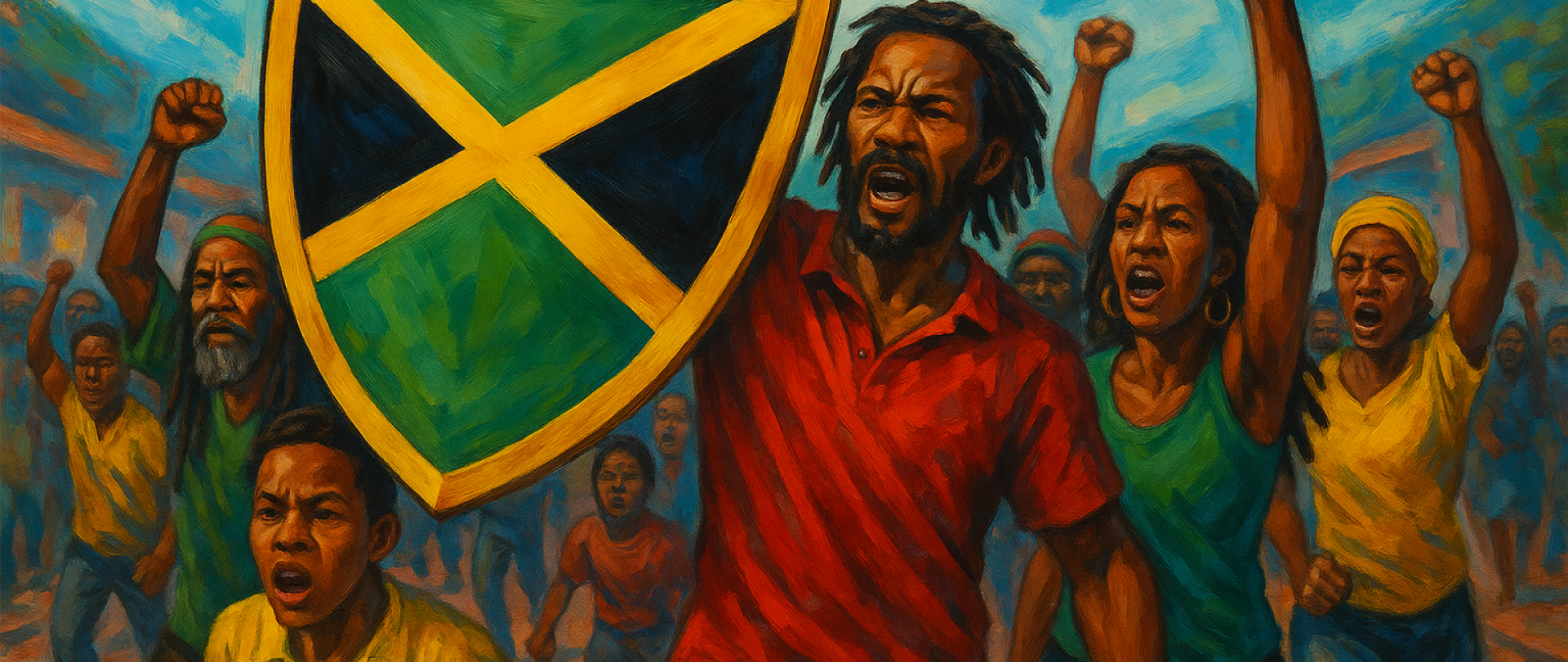
Draft Document
CONSTITUTION OF THE ISLAND OF JAMAYKA
(Land of Wood, Water, and Proud People)
Preamble
We, the free people of the island of Jamayka, united by land, sea, and shared purpose, declare our collective right to govern ourselves in freedom, justice, and dignity.
We declare and affirm that the authority of government comes only from the people who live upon this land.
We establish this Constitution to secure liberty, protect the natural rights of all people, maintain peace and order, preserve the land and waters of the island, and create a just system of law that is clear, fair, and equal to all.
We reject corruption, tyranny, and rule by hidden power. We reject laws that exist outside the knowledge or consent of the people.
We therefore establish this Constitution as the single and supreme source of law for Jamayka, replacing all prior systems of rule.
This Constitution is written in plain language so that every person may read, understand, and rely upon it.
All authority exercised in Jamayka must arise from this Constitution and remain accountable to the people.
With this declaration we establish a free and sovereign society founded upon
truth, responsibility, justice, and mutual respect.
Declaration of the People
- Sovereignty of the People
All power in Jamayka belongs to the people of the island.
Government exists only to carry out the will of the people and to protect their
rights and safety.
No person, office, institution, or organization may claim authority that does not explicitly come from this Constitution.
- Supremacy of the Constitution
This Constitution is the highest law of Jamayka.
Any law, regulation, or action that conflicts with this Constitution is invalid.
- Equality Before the Law
All people are equal under the law.
No person shall receive immunity or special protection from the law because of rank, wealth, political position, or public office.
- Plain Law
All laws must be written in clear language.
Hidden rules, unwritten doctrines, or secret interpretations of law shall not be
recognized.
- Open Government
All actions of government must be recorded and open to public review unless the safety of the people requires temporary secrecy.
- Accountability
Every public official is personally responsible for the lawful exercise of their authority.
Violations of the law by public officials shall be investigated and judged under the same law that applies to all citizens.
- Protection of the Land
The land, rivers, forests, and seas of Jamayka belong to the people and must be protected for present and future generations.
- Civil Participation
The people shall participate directly in important decisions of national importance through open voting.
Government shall not exist as a distant authority but as a structure maintained by the people themselves.
Bill of Rights and Freedoms
- Right to Life and Security
Every person has the right to live in safety and dignity.
No person may be deprived of life or liberty except through lawful judgment after a fair trial by an impartial tribunal of three judges from different parishes or a jury of 9 people from different parishes, unrelated to any party.
- Freedom of Thought and Belief
Every person may hold and express their beliefs, religious or otherwise, without interference.
- Freedom of Speech and Expression
Every person has the right to speak, write, publish, and share ideas without
censorship, subject only to laws protecting the safety and rights of others.
- Freedom of Assembly
People may gather peacefully to discuss matters of public interest and to petition their government.
- Freedom from Arbitrary Arrest
No person may be detained or arrested without lawful cause supported by
evidence sufficient to prove harm, damage, loss of life or loss of right.
- Fair Trial
Every person accused of a crime has the right to:
- Face the accuser in court
- know the accusation
- present evidence
- question witnesses
- defend themselves personally or with assistance
- be judged by an impartial court.
- Public Courts
All courts shall operate openly and maintain full records of proceedings including audio, video, written rulings, and evidence.
- Protection of Privacy
The private lives, homes, communications, and personal records of individuals
shall not be interfered with except under lawful authority and evidence.
- Property Rights
People have the right to own property and to use it peacefully.
Property may not be taken except for public necessity and fair compensation.
- Protection from Cruel or Arbitrary Punishment
Punishment must be lawful, proportionate, and publicly known.
No punishment may be imposed except under a law written and enacted before the alleged offense.
All judges imposing punishment shall be named in full and sign every order by hand.
A trial by jury shall be anonymous in judgment, and shall only require the signatures of the majority.
- Right to Education
All children shall receive education necessary to understand the laws, history,
language, and responsibilities of society.
- Right to Representation
Any person may represent themselves or choose another person to assist in their legal defense.
No person shall be forced to hire a lawyer nor attorney, nor legal professional.
- Right to Record Government
Citizens may document public officials performing public duties.
- Right to Participation
Citizens have the right to vote on matters of national importance as provided in this Constitution.